


Accessing Water in the South Asian City edited by Sara Keller
INFORMATION
- EDITOR : Sara Keller
- HB ISBN : 978-93-6883-991-0
- Year : 2025
- Extent : 452
- Discount available on checkout
- Usually dispatched within 3 to 5 working days.
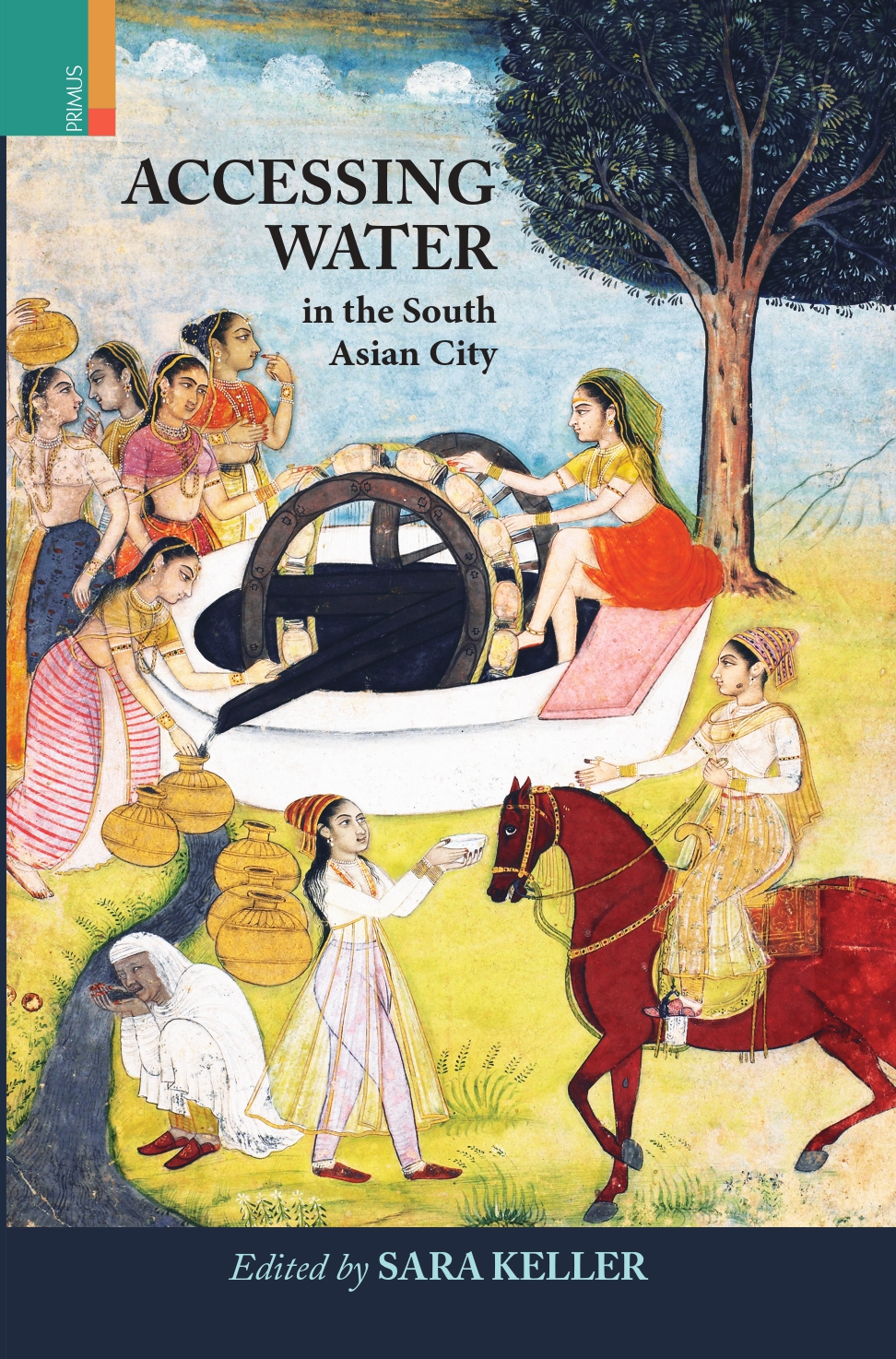
Water has always been essential to cities, but more than that, it is a crucial element of urban life in South Asia, materializing through remarkable waterscapes and practices. Looking at a broad geographical and historical scale, Accessing Water in the South Asian City discusses the role played by urban socio-religious constructs in the shaping of exceptional, complex, and sometimes problematic, waterscapes.
Besides examining the question of resources and inconsistencies in water access, the volume focuses on the forces that converge in facilitating or in impeding access to water in the urban context, in the past and in the present. Water is a political affair not just because it relates to power and politics, but because it is an essential affair of the ‘polis’, the urban community. Anthropogenized water spaces offer an exceptional opportunity for urban dwellers to engage with nature, interact with fellow urbanites and be active producers of a new, inspiring kind of urbanity
Contents
List of Illustrations
Acknowledgements
Introduction: Providing and Restricting Access to Water in the South Asian City by Sara Keller
Part I: Inconsistent Resources
1. Dependency on Water and the South Asian City: Questions of Location, Urban Planning and Architectural Design by Julia A.B. Hegewald
Part II: Providing Access
2. Water Access, Urbanism and Monastic Placemaking: Upland–Lowland Socio-ecologies and Governmentalities in Early-Historic South Asia by Julia Shaw
3. The Tughluqs and Their Water Strategies, 1320–1413 by Jutta Jain-Neubauer
4. Naldurg Fort, Deccan, India (Sixteenth–Seventeenth Centuries): A Fortified Water Control? by Nicolas Morelle
Part III: Water Wisdom go
5. Hiti System: Traditional Water Wisdom in Nepal Mandal by Padma Sunder Joshi
6. Water and Urbanism in Western India: The Navnāth Temples of Vadodara by Prakhar Vidyarthi
7. The Difficult Reappropriation of an Ancient Technical Knowledge: Rainwater Harvesting in Ahmedabad, India by Akil Amiraly
Part IV: Restricting Access
8. Legitimizing Exclusion: Delhi’s Historical and Moral Pipelines of Power by Heather O’Leary
9. Customary Water Management Systems and Contemporary Changes of Spatial Use in Tamil Nadu, India by Laura Verdelli
Notes on Editor and Contributors
Board of Reviewers
Index
.
The Editor
Sara Keller has worked, since 2019, at the Max Weber Centre, Erfurt University on the architectural landscape of South Asian cities. She earned her PhD in Theory and Praxis of Archaeology from the Sorbonne University and the University of Bamberg. She specializes in the study of architecture and urban centres of western India and focuses on cultural meanings of built spaces. She has published extensively on the port towns of Gujarat, cities and urbanity of premodern India, Vāstu śāstra, architectural knowledge and transmission, and urban waters and waterscapes in historical India.